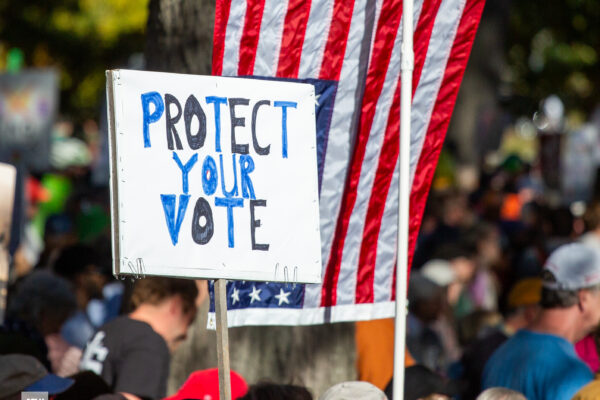
Federal attacks on voting rights have raised a lot of questions. Here are answers to some of the ones we hear most often.
Who runs Maine’s elections?
Maine’s chief election official is the Secretary of State, and there are hundreds of non-partisan civil servants who keep Maine's elections free, safe, and secure.
Your local municipal clerk works at your town or city hall and oversees voting in your town, including absentee voting, coordinating polling place operations, training election officials, training volunteers who work the polls, and more.
Non-partisan clerks work at polling places on Election Day to oversee voting and count ballots. Maine law requires at least two election clerks at each polling place – one from each major political party.
Maine's election workers are members of their own communities, and they are people you likely know and trust. Their mission is to make sure every eligible voter can vote and that every vote is counted – not to persuade you to vote for any particular candidate or cause.
I voted. What happens to my ballot?
Maine uses the gold standard for safe and secure voting. All Maine voters use a paper ballot, and most towns tabulate those votes using scanning machines. As soon as the polls are closed on Election Day and the last person in line has voted, the warden at each polling place runs the tabulation and announces the totals for each race and question on the ballot. Ballot tabulation machines are never connected to the internet, and the paper ballots can always be recounted to ensure every vote was counted correctly.
After votes are tabulated, election officials place the paper ballots into sealed metal boxes. The boxes are stored in a secure location, such as the vault in your town hall, in case they are needed for a recount or for ranked-choice tabulation.
Maine has track record of running free, safe, and secure elections, and we have some of the best voter participation in the country. You should feel very confident in how well Maine runs elections.
How can I know my absentee ballot is counted?
No matter how you vote early/absentee, you can track your ballot online! This works whether you vote early in-person at your municipal office, return your ballot by mail, take your ballot to your town's secure drop box, or deliver it to your municipal clerk.
Is the right to free speech different at polling places?
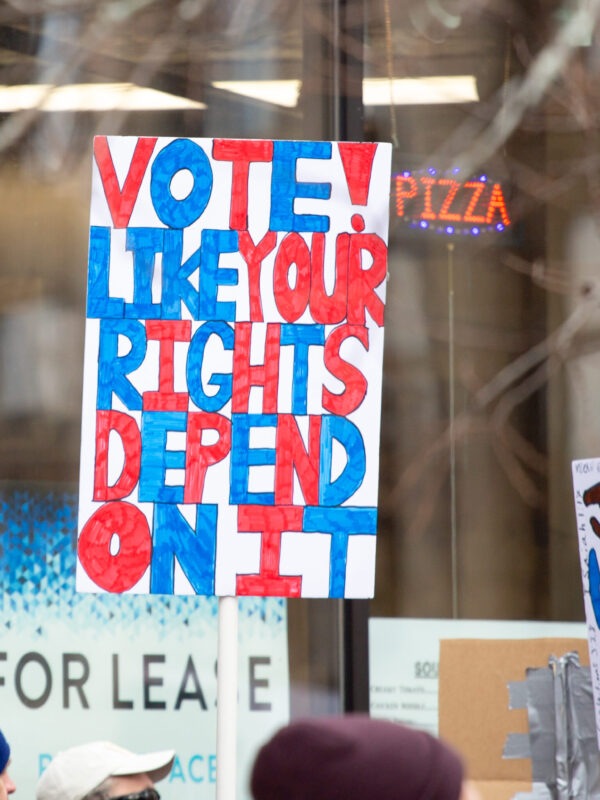
Yes. Maine law makes it a crime to interfere with a person who is trying to vote, including yelling at them or criticizing a voter. Yelling and criticizing are typically protected activities under the First Amendment, but polling places are different under state and federal law.
The U.S. Supreme Court has ruled that preventing voter intimidation is a compelling justification for restricting activities at polling places that are typically allowed. The Supreme Court said, in Burson v. Freeman, that voters should be able to have a few moments to themselves “as free from interference as possible” before they fill out their ballot.”
So, if you want to advocate for candidates or protest, you cannot do it at a polling place. You can make your voice heard in a traditional public forum, like your neighborhood park or another public space. Learn more about your protest and free speech rights at ACLUMaine.org/KnowYourRights.
If someone is interfering with your right to vote, tell the warden or the clerk at the polling place – don’t let them scare you away. The right to vote is one of our most important rights, and our democracy depends on all of us showing up and casting a vote.
If you have any questions or face intimidation, contact the Election Protection Hotline by calling 866-OUR-VOTE or visiting 866OurVote.org
What happens if federal agents show up at the polls?
Federal law explicitly prohibits the presence of armed federal agents at the polls, and every eligible citizen has the right to cast a ballot freely and fairly, without fear of intimidation.
However, if you’re worried about encountering federal agents on Election Day, make a plan to vote early. You can vote early until October 28th at your local municipal office, or mail in an absentee ballot.
Learn more about your rights if you encounter federal agents at the polls here. If you encounter intimidation or other issues, call the Election Protection Hotline at 866-OUR-VOTE or visit 866OurVote.org.
Can I bring an interpreter or other helper to the polls?
Yes. If you need help reading or marking your ballot or need another type of assistance, you are allowed to bring in a friend, relative, interpreter, or other helper. That helper does not have to be a registered voter or old enough to vote, but they cannot be your employer or union representative.
An election official at your polling place can also help you read or mark your ballot.
Visit Disability Rights Maine for more information about accessibility at the polls. Contact the Maine Immigrants' Rights Coalition for assistance connecting with a language interpreter.
Who is allowed to vote in Maine?
Any U.S. citizen who lives in Maine and is at least 18 years old on Election Day can cast a ballot. If you aren’t a citizen, you cannot vote in any elections in Maine, including local elections, referendums, and federal races.
I moved to Maine for college. Can I register to vote in Maine?
If you’ll be 18 years old on Election Day, are a U.S. citizen, and are living in Maine while you’re in school, you can register to vote where you live. You can establish a voting residence at your Maine campus address, even if that's a dorm or apartment. Don’t forget that if you register where you live for college, you cannot vote anywhere else, like where you grew up.