


We're challenging the federal government's attempt to access Maine's unredacted voter file
We heading to court again – this time to protect Maine voters.
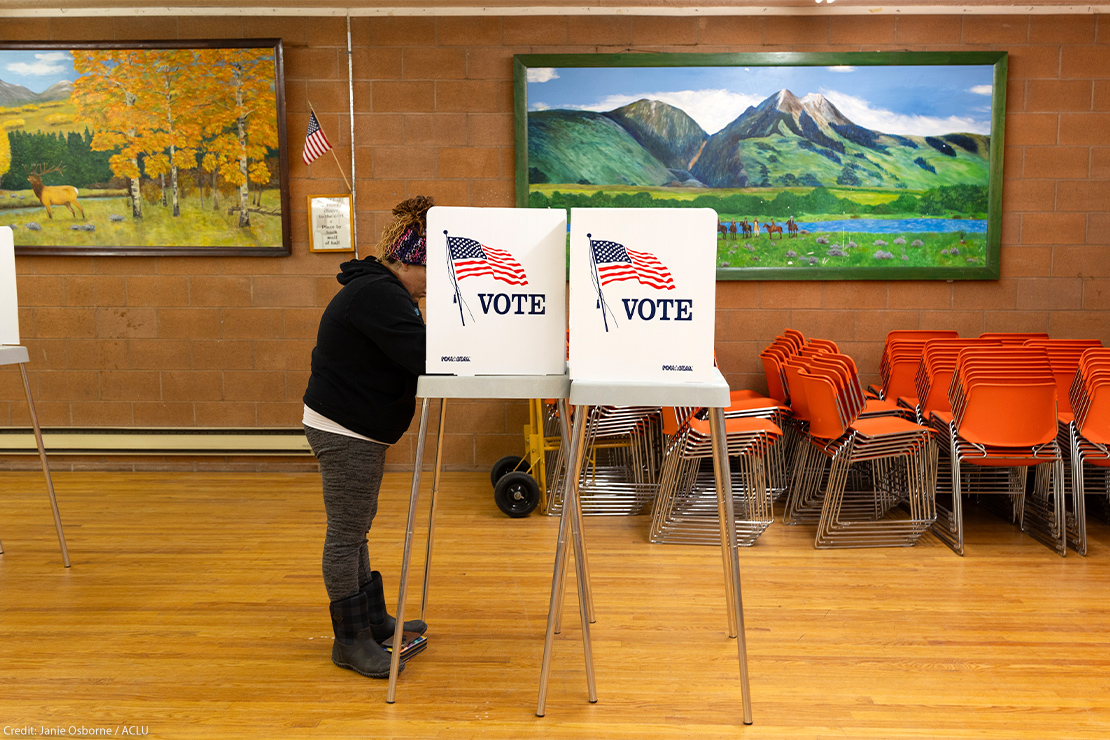
On Friday, we filed a friend-of-the-court brief in United States v. Bellows to protect Maine people's voting and privacy rights.
The lawsuit originated when the Trump administration demanded that Maine's secretary of state hand over our state's unredacted voter files. When she declined, the U.S. Department of Justice (DOJ) filed a lawsuit in an attempt to force the secretary to share the unredacted file, which includes sensitive information, such as driver's license numbers and parts of Social Security numbers.
In our brief, we argued that the federal government's demand for unredacted, sensitive voter information is unlawful under federal voting law and state privacy law. We urged the court to deny the federal government's demands for the unredacted files and dismiss the lawsuit.
Maine voters share their sensitive information with the government so they can exercise their right to vote, and they deserve to know that it will remain safe. DOJ’s overreach is a violation of voter trust and data privacy, and could depress voter turnout and serve as the basis for false and dangerous claims.
Rockland Council Votes to Limit Local Involvement in Federal Immigration Enforcement
The measure will help preserve local resources for local priorities.
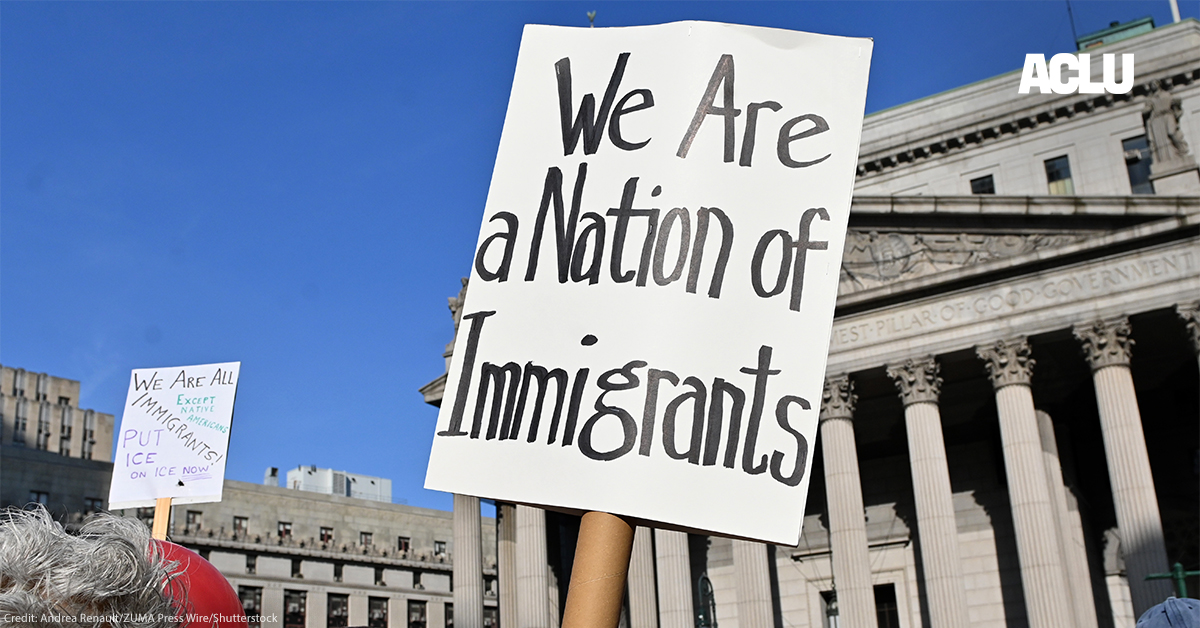
On Monday night, Rockland City Council voted 4-1 to limit local involvement in federal immigration enforcement.
The ordinance will amend the city code to state that “employees and resources cannot be used to assist, cooperate with, or facilitate any federal agency in any immigration enforcement operation, except where legally required to do so by state or federal law or court order.”
The ACLU of Maine played a key part in drafting the ordinance and hopes the momentum will encourage Governor Mills to allow LD 1971 to take effect at the start of the next year. LD 1971 is a bill that would restrict all state and local law enforcement from supporting federal immigration enforcement except where required by law.
Maine towns and cities do not have to be complicit in the president's abuses of power and violations of our rights – and statewide protections would ensure this for all, no matter where they live.
Public records requests reveal increase in traffic stops that lead to ICE or CBP detentions
Maine people deserve to know how federal immigration agents are operating in our state, and how state and local law enforcement may be supporting them.
The ACLU of Maine has filed dozens of public records requests to agencies around Maine to better understand how local law enforcement may be cooperating with Immigration and Customs Enforcement (ICE) and Customs and Border Protection (CBP).
ICE and CBP often use state and local law enforcement resources to arrest and detain immigrants and people they suspect may be immigrants. They use these local resources in many ways, including by using beds in jails and prisons, and formally or informally partnering with local law enforcement to help move people into federal custody.
Collaboration between local and federal officials frequently occurs during traffic stops. Police will pull over a car, usually for a minor traffic infraction, suspect that people in the vehicle may not be citizens, and then call ICE or CBP to take the person into federal custody – all because of a minor traffic issue.
This type of collaboration has long occurred in Maine, but we've seen an increase as the Trump administration expands federal immigration enforcement. The public is entitled to know when their local government decides to take on the federal government’s work, if they are following the law, and when they use public resources to support federal priorities.