United States v. Bellows – Protecting Sensitive Voter Data

  • Filed: December 12, 2025
  • Status: Active
  • Court: U.S. District Court for the District of Maine
  • Latest Update: Dec 12, 2025
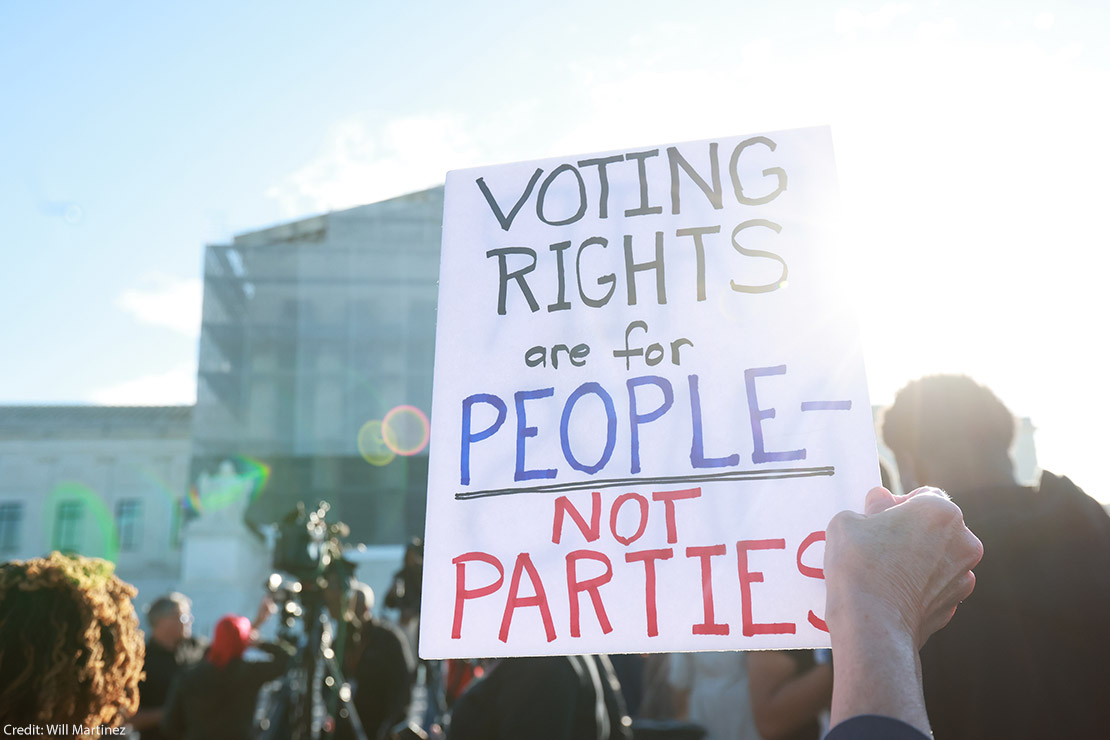
An individuals holding a sign saying "Voting Rights Are For People Not Parties," outside of the U.S. Supreme Court ahead of arguments in the Voting Rights case Callais v. Landry.

We’re challenging the federal government’s attempt to access Maine’s unredacted voter file – including information like voters’ social security and driver’s license numbers.

The Trump administration is attempting to force Maine to disclose unredacted voter records including sensitive personal information like parts of social security and driver’s license numbers. We filed a friend of the court brief to challenge this attempted overreach to protect voter privacy, data security, and confidence in Maine’s free, fair, and secure elections.

In September 2025, Maine's secretary of state declined an initial request from the U.S. Department of Justice (DOJ) to share its unredacted voter file. DOJ filed a lawsuit in federal court attempting to force the secretary to share the unredacted voter file.

Unredacted voter information includes sensitive details about Maine voters, including birthdates, driver's license numbers, and social security numbers. Handing over this information to the federal government, with no say in how it will be used and no understanding of why it was requested, would violate federal voting law and state privacy laws.

Federal voting rights laws were designed to create free, fair, and secure elections, including the National Voter Registration Act (NVRA), the Help America Vote Act (HAVA), and the Civil Rights Act of 1960 (CRA). These federal laws were designed to expand and protect voting rights for all – including vulnerable communities that were once denied the right to vote and remain targets for voter suppression efforts – and ensure public confidence in our elections.

The federal government’s overreach undermines voter trust and public confidence in our elections. What’s worse is that Maine has robust data privacy protections – laws that were passed with broad bipartisan support – and the federal government is demanding that Maine ignore them. We can’t let them get away with it.

Maine voters who share their sensitive information with the government so they can exercise their right to vote deserve to know that it will remain safe. The DOJ’s overreach is a violation of voter trust and data privacy, and could depress voter turnout and serve as the basis for false and dangerous claims.

In our brief, we urged the court to uphold the intention of the federal laws that were designed to protect voting rights for all and to protect the integrity and security of Maine’s safe, secure, and accessible voting system.

Case Number:
1:25-CV-0468-KFW
Partner Organizations:
ACLU Voting Rights Project