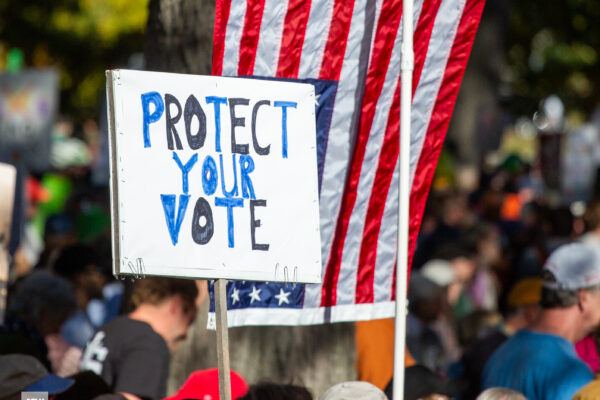


The Trump administration is demanding private, sensitive information about voters throughout the country. We're fighting back.
When you register to vote, you share sensitive information – such as your birthdate, driver's license number, and Social Security number – to verify your identity. The administration has demanded that states throughout the country hand over sensitive voter information, with no explanation for why it is needed or how it would be used. Maine refused. This week, a district court sided with us and stopped this federal overreach. Here's what happened.
United States v. Bellows: Background
In September 2025, the U.S. Department of Justice (DOJ) sued Maine Secretary of State Shenna Bellows after she declined to hand over the state's unredacted voter file.
The ACLU of Maine filed a friend-of-the-court brief to challenge this attempted overreach to protect voter privacy, data security, and confidence in Maine’s free, fair, and secure elections. In our brief, we urged the court to uphold the intention of the federal laws that were designed to protect voting rights for all and to protect the integrity and security of Maine’s safe, secure, and accessible voting system.
We also participated in oral arguments at the federal courthouse in Portland in March 2026.
Federal laws, including the National Voter Registration Act, the Help America Vote Act, and the Civil Rights Act of 1960, were designed to create accessible, trustworthy elections. They expanded and continue to protect voting rights for all – including vulnerable communities that were once denied the right to vote and remain targets for voter suppression efforts – and ensure public confidence in our elections.
Maine's own state privacy law includes another level of protection to keep sensitive personal information safe. These were passed with broad bipartisan support, and the federal government wrongly demanded that Maine ignore them.
U.S. District Court Blocks DOJ's Overreach
On May 21, 2026, the U.S. District Court for the District of Maine dismissed the case. The court found that DOJ's demand for the unredacted voter file without an explanation for why it wanted it or how it would use it violated federal voting law and Maine privacy protections.
Protecting voter data isn't just a privacy issue; it's also a voting rights issue. When people can't trust that their personal data is secure, they may choose not to register to vote at all or may not trust that their vote is counted accurately. Eroding trust in our voting system weakens general confidence in elections and undermines our democracy.
—Eroding trust in elections can depress voter turnout and serve as the basis for patently false and dangerous claims. Our federal laws were designed to expand and protect voting rights for all.
Zach Heiden, Chief Counsel at ACLU of Maine
This isn't just happening in Maine. DOJ has made similar demands for unredacted voter files throughout the country, and the ACLU is fighting back. We've engaged in over 20 related cases, including United States v. Bellows.
Our elections are free, safe, and secure – and we'll continue fighting to keep it that way. This ruling is a win and should increase voter confidence.
Maine's Primary Election is June 9, 2026
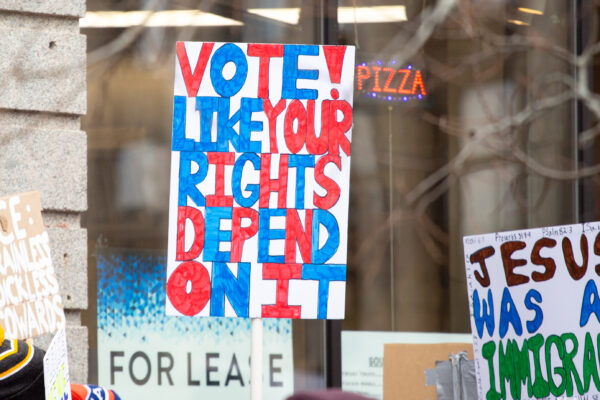
Your voice is your power. Make a plan to vote.
This is a consequential primary election for Maine. Voters will decide every seat in the state Legislature this year, plus a U.S. Senate race and an open race for governor. Learn more about how you can vote by mail, vote early in person, or vote on Election Day.
Don't forget: It's always a good day to register to vote in Maine! You can register at your town or city office, or at your polling place on Election Day. Learn more and make a plan to vote.